Zvanning
- Category
- UI Design
- Roles
- Product Owner, User Researcher, Visual Designer
- Client
- Founder led product concept
Vanlife sells freedom, yet many vanlifers feel alone on the road
Overview
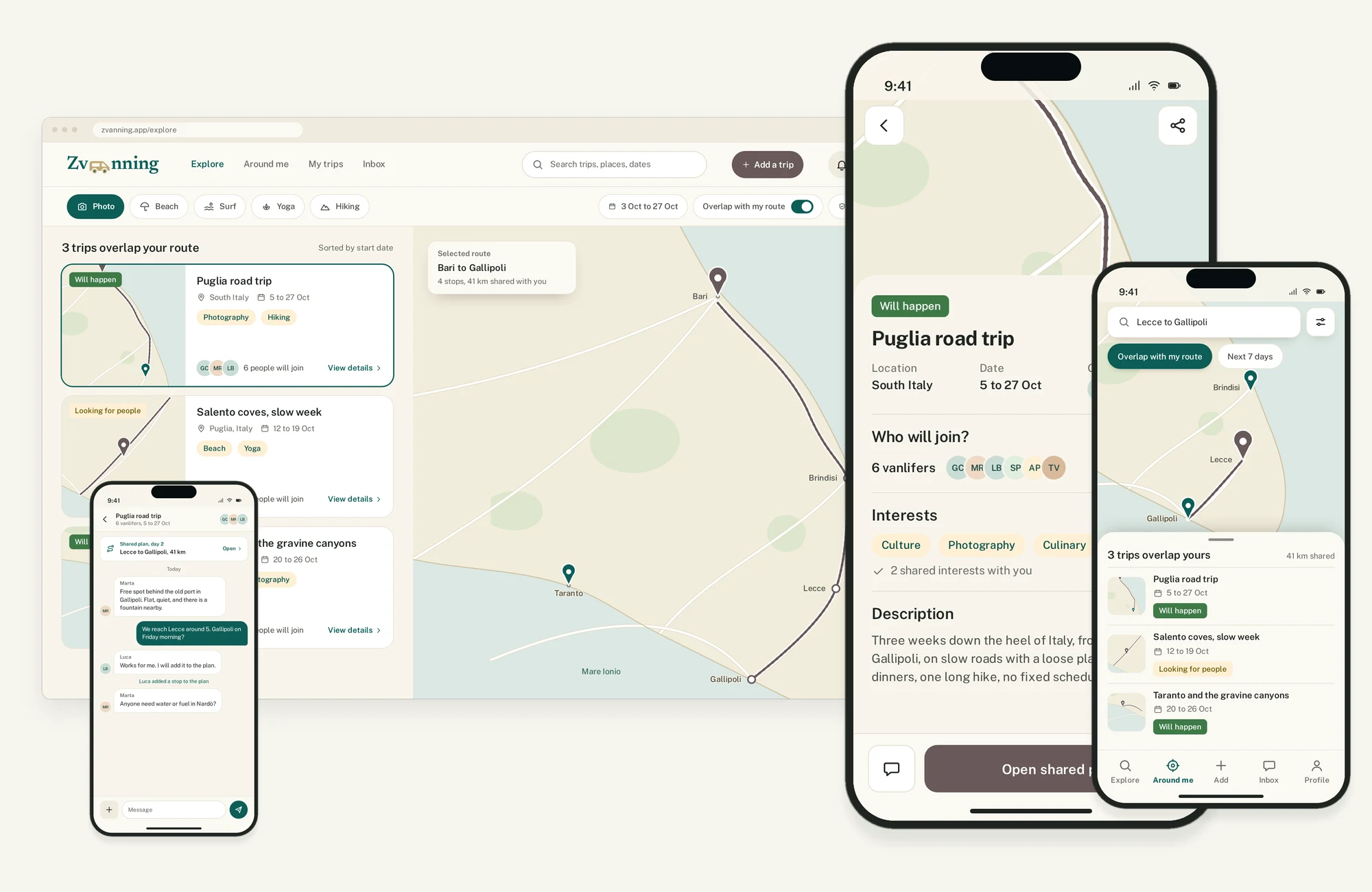
Zvanning is a mobile app for vanlifers looking for real connections on the road. It helps solo vanlifers find travel companions, plan trips together and share knowledge safely. I did not design it from a desk. It grew out of in person interviews during my own travels around Europe, and I refined it with feedback from the vanlife community.
The problem
Vanlife promises freedom, and still many vanlifers feel isolated, with no community around them. The tools for finding like minded travellers are scattered, and none of them fits the lifestyle, the needs or the safety worries of people living in a van.
Prototype video
A walkthrough of the prototype I built, from sign in to the first chat.
Four steps, start to finish
Step 1
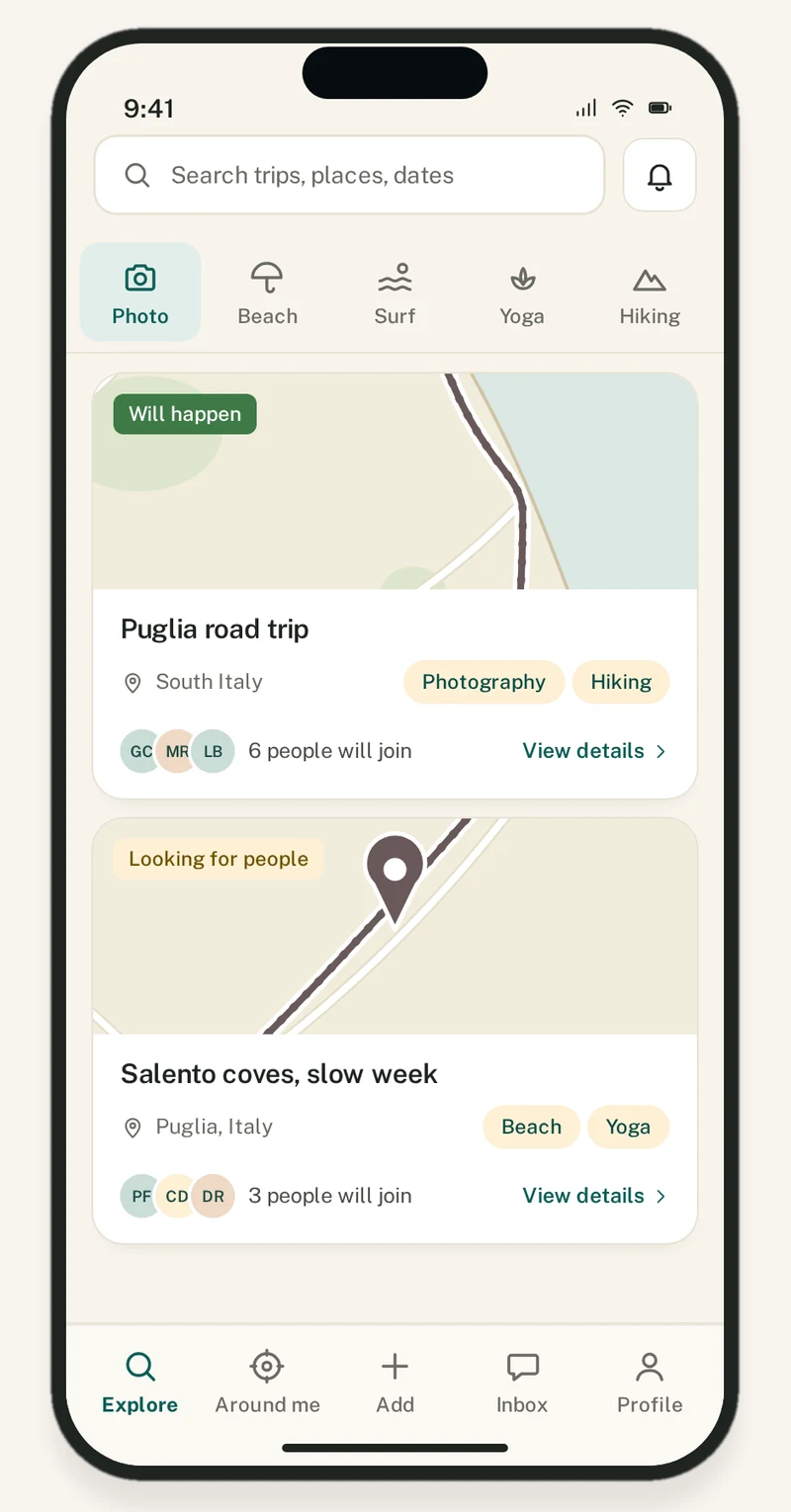
Find your route
Trips that overlap with where you are going.
Step 2
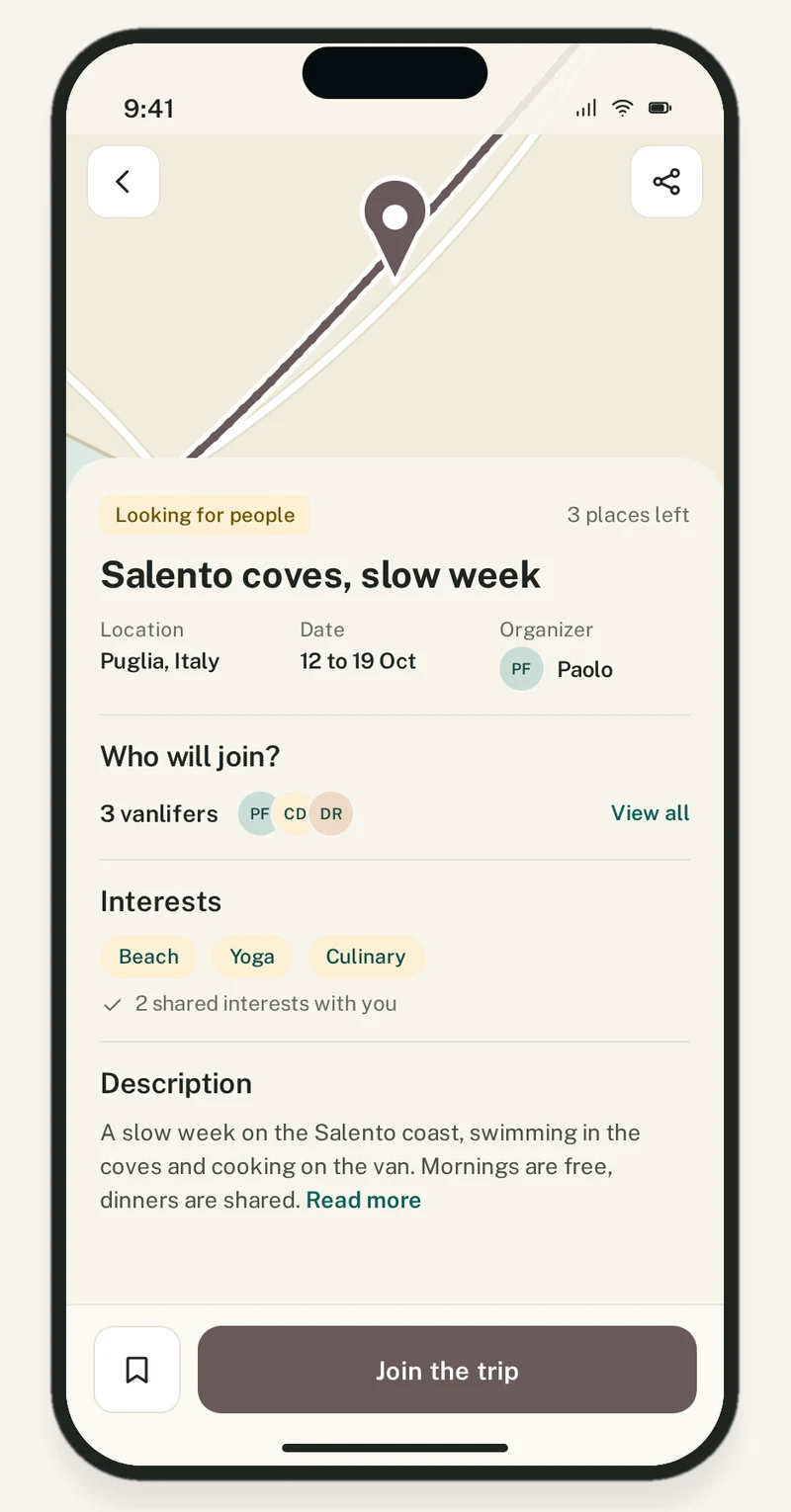
See who is going
Dates, people and shared interests before you decide.
Step 3
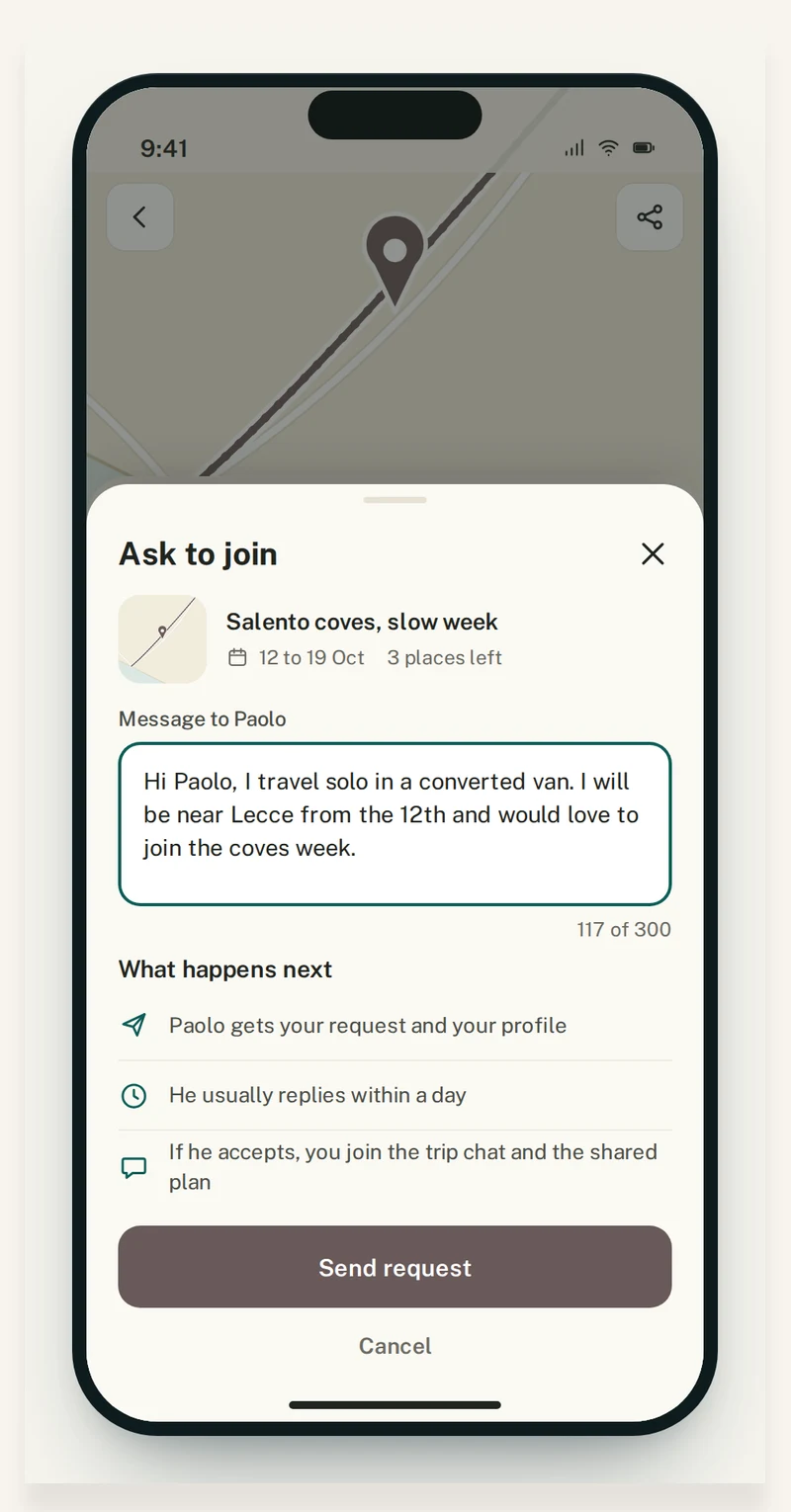
Ask to join
A short note to the organizer, nothing more.
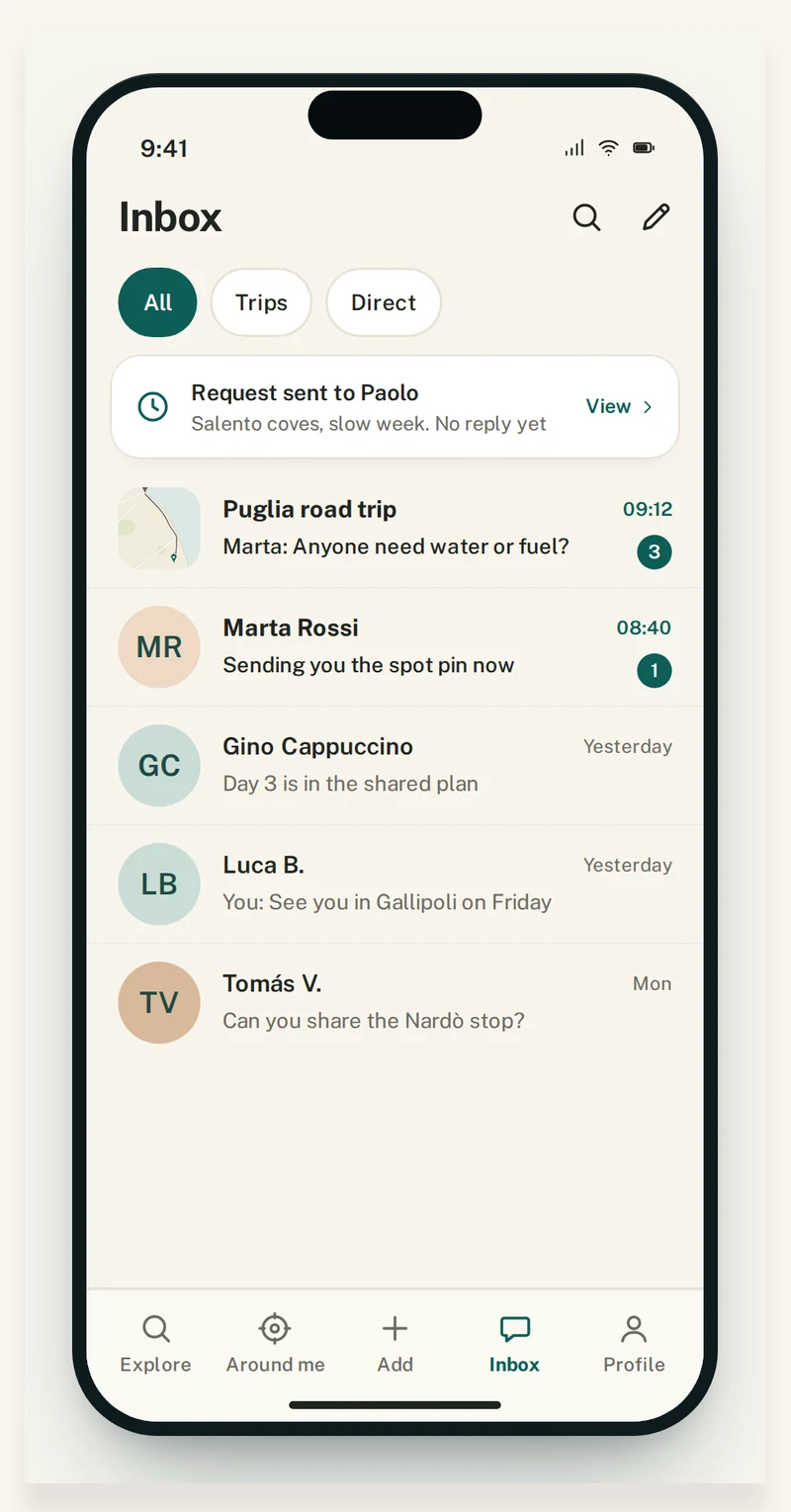
Step 4
Hear back
Replies land in the inbox, next to your trip chats.
Process
Inception
Context
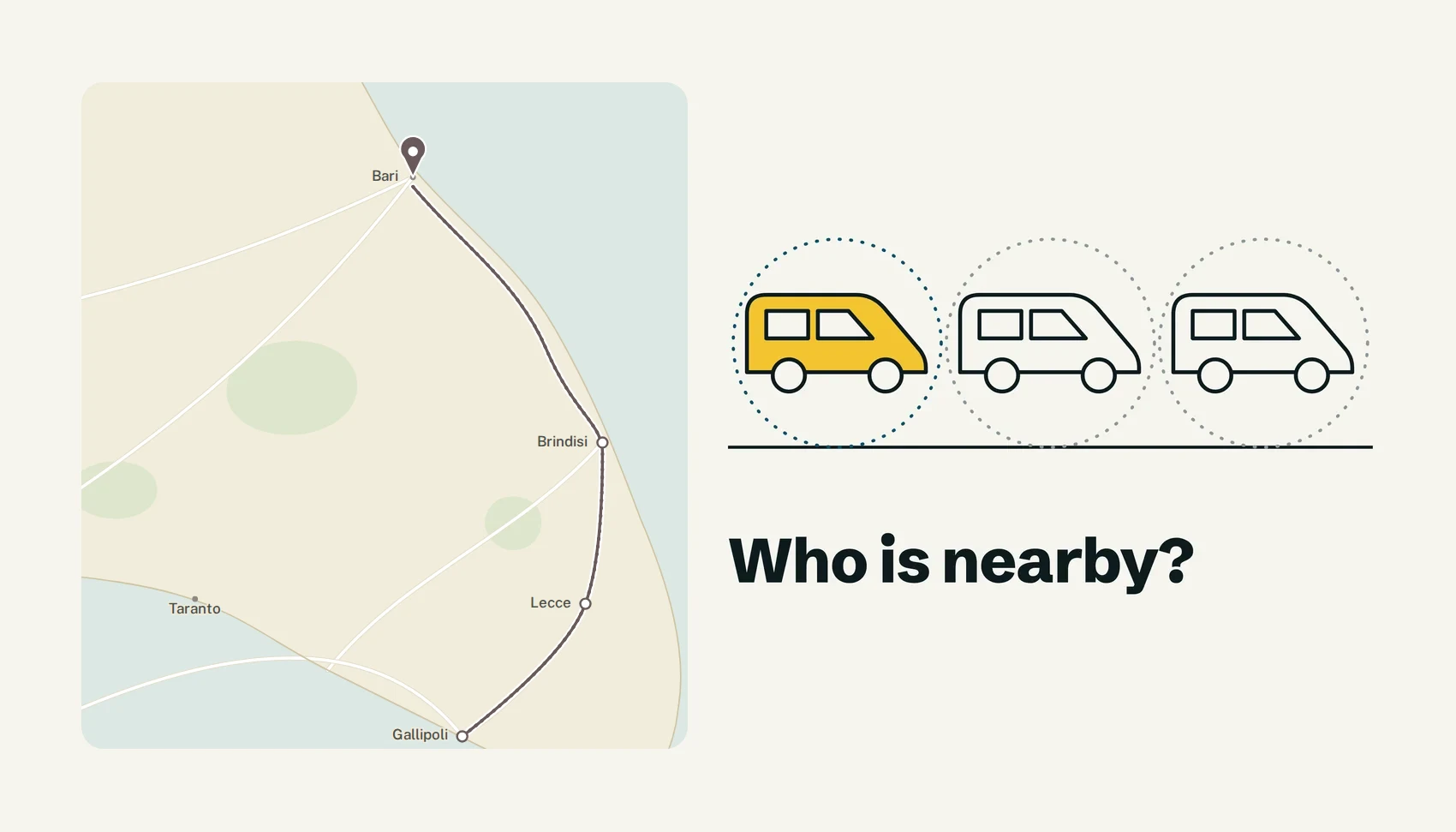
Travelling around Europe in a campervan, I noticed how hard it is to meet other vanlifers in real time. That became the idea for a dedicated app.
Goals
- Let vanlifers connect and travel together
- Real time matching and collaborative planning
- Safety through trust building tools
- A stronger sense of belonging
Discover
Research
- In person interviews with vanlifers met around Europe
- Field observation of daily routines and pain points of solo vanlifers
- Competitive audit of Couchsurfing, BlaBlaCar and Meetup
Findings
- A strong need to connect spontaneously and safely
- Fragmented tools for trip sharing and co travel planning
- Interest in pooling resources and experiences
- Trust and flexibility are core to shared vanlife
Personas
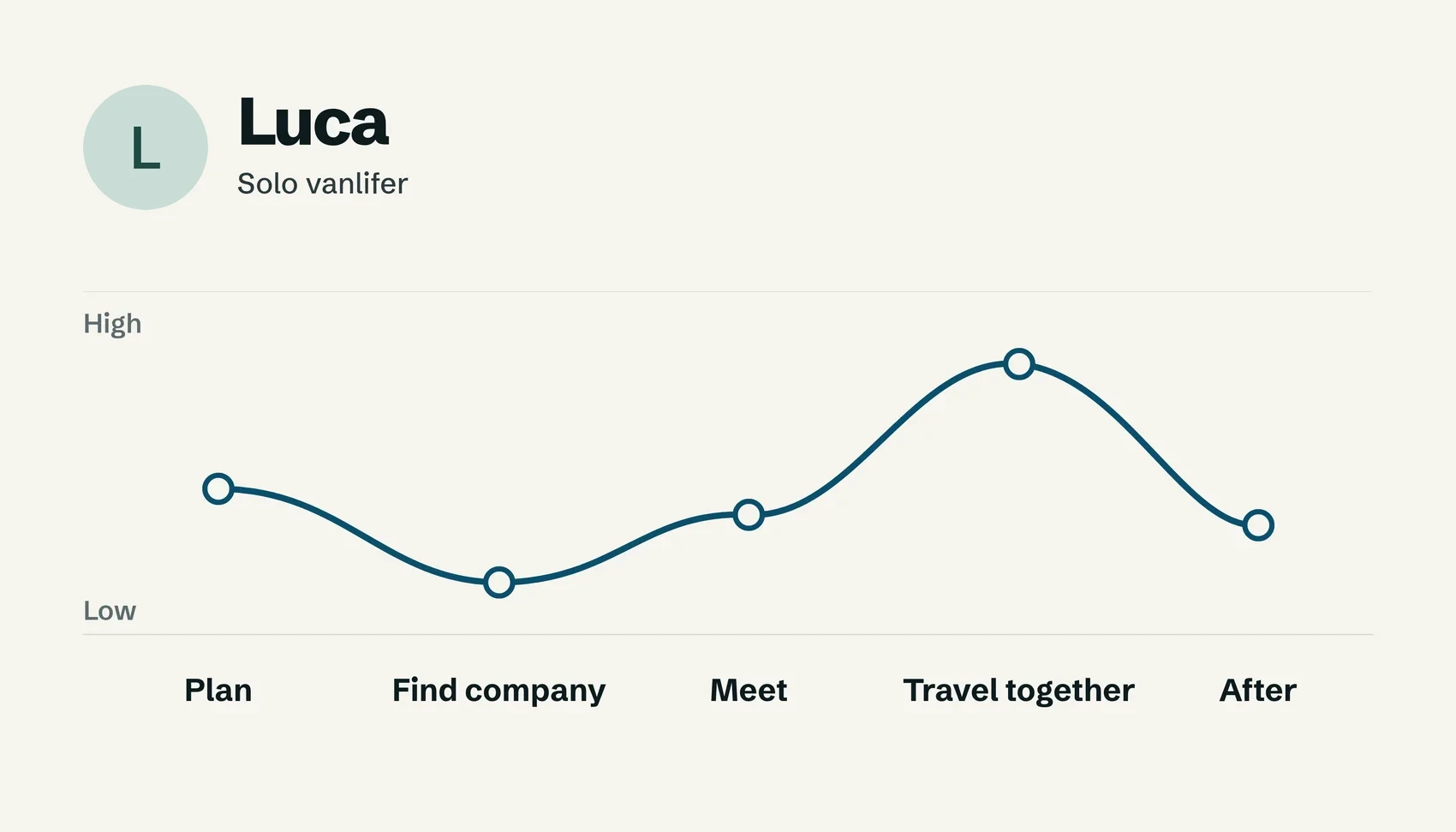
Luca, 32, solo vanlifer and remote developer, wants to avoid isolation and needs trust and flexibility in choosing companions. Sofia, 28, digital nomad and content creator, looks for safe places to park and cowork and for spontaneous, low commitment travel groups.
Design
Approach
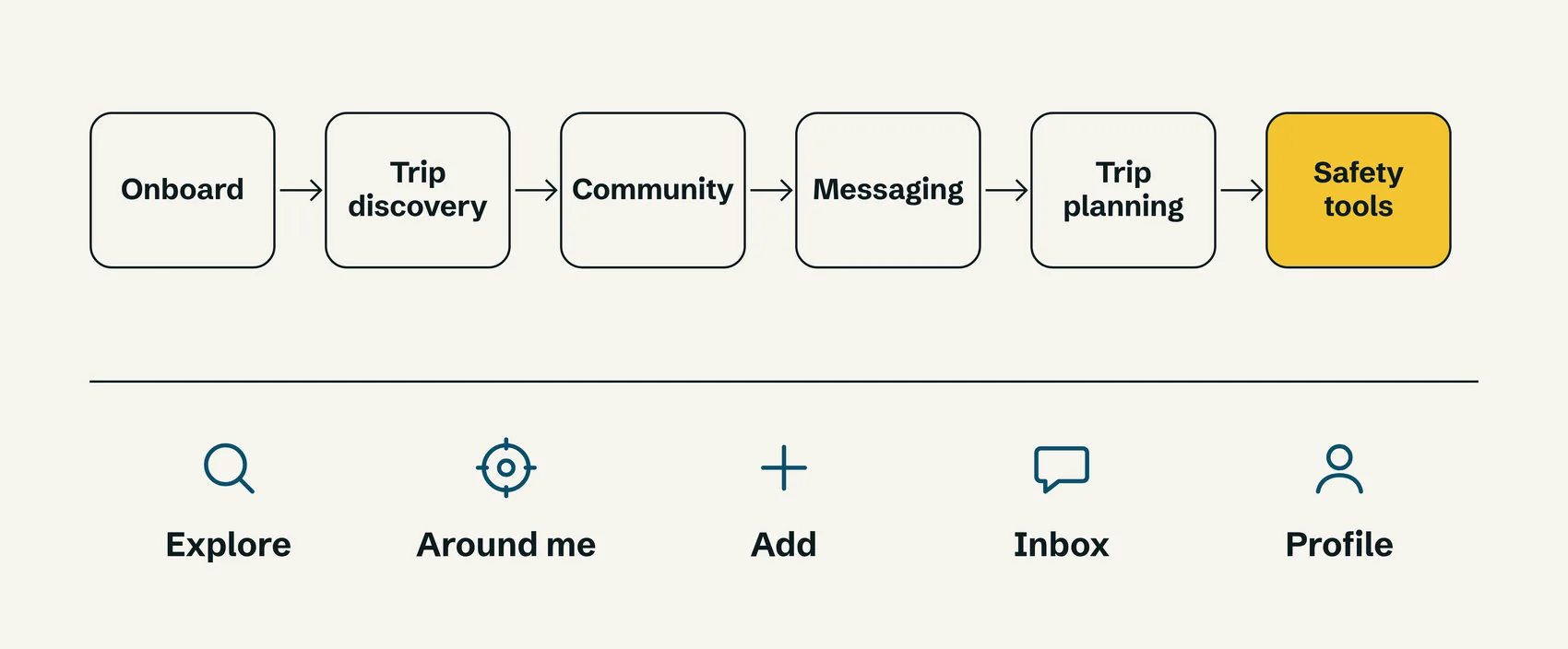
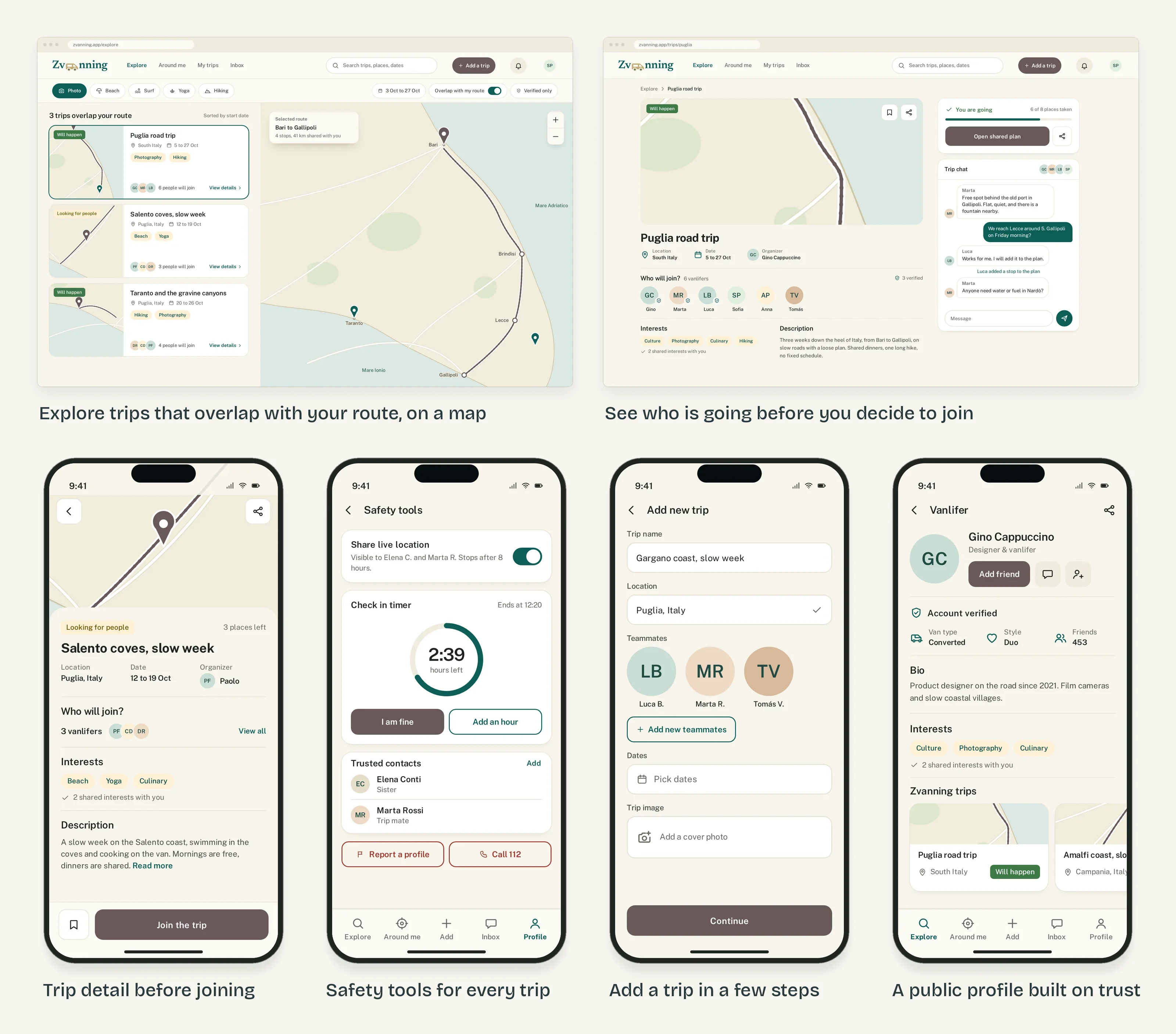
User first, from low to high fidelity prototypes shaped by vanlifer feedback. Priorities: dynamic trip matching, shared itineraries, in app communication and visibility on shared travel goals. The visual style borrows natural tones and structures familiar to vanlife culture.
Test
Methods
- Mid and high fidelity prototypes tested with 5 vanlifers met while traveling
- Qualitative sessions by video and async walkthroughs
- Focus on usability, trust and decision flow
Insights
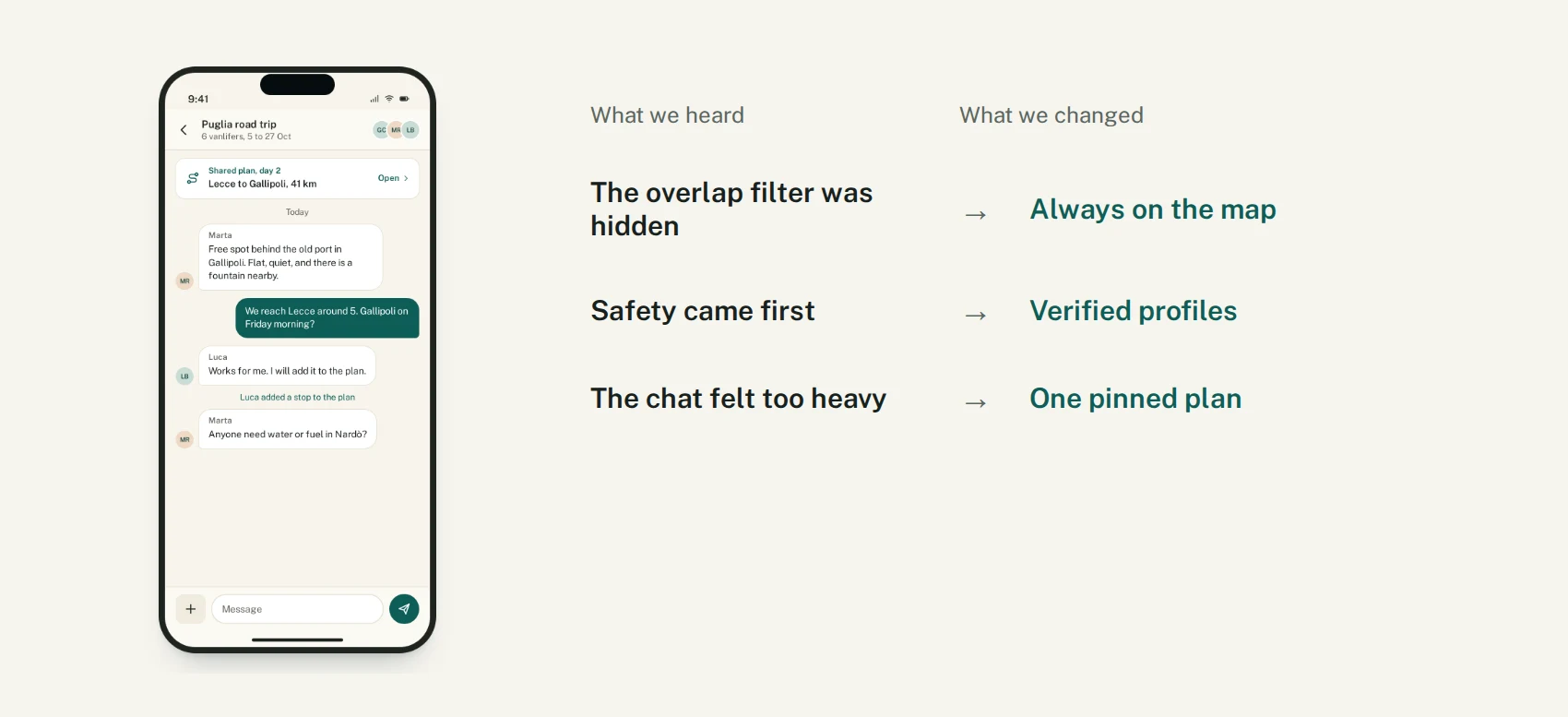
- Real time trip overlap filtering was highly valued
- Users stressed safety and transparent profiles
- Chat and shared planning needed simplifying for mobile
Develop
Specs
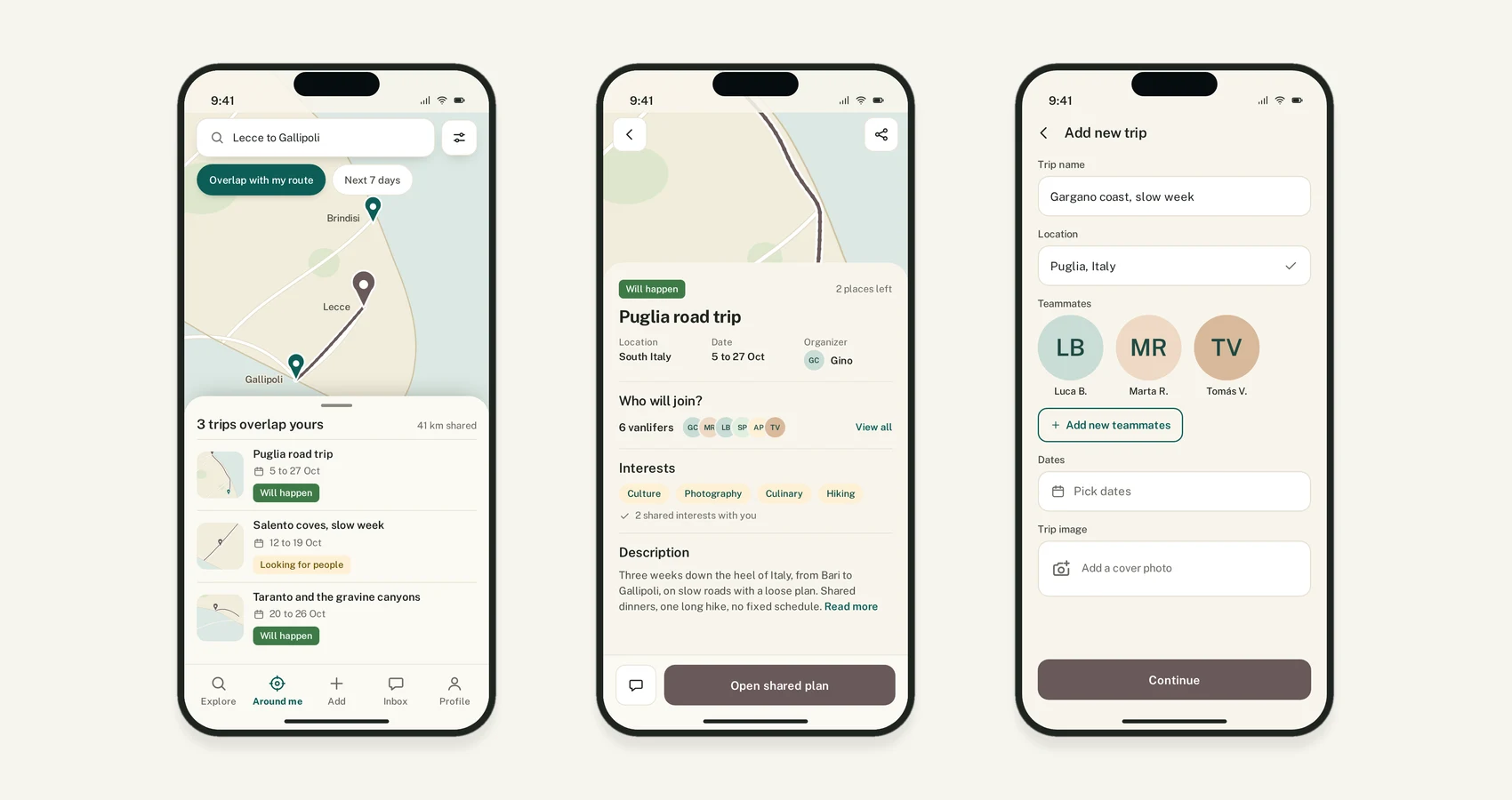
- Design in Figma and FigJam
- Testing with Maze and Google Meet
- Documentation in Notion
- Responsive mobile prototypes and an annotated UI kit
Measure
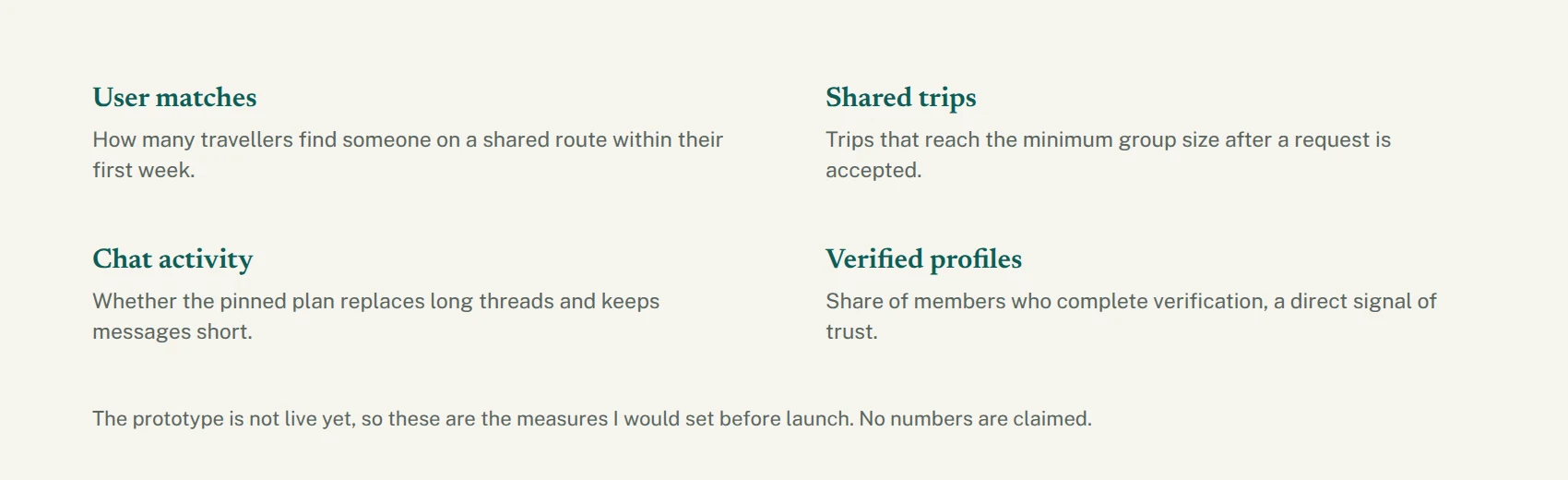
Planned metrics
- Number of successful user matches
- Shared trip creations and planning sessions
- Engagement in messaging and the community feed
- Verification adoption and profile completion
Gallery
Outcome
The vanlife community I met on the road embraced the idea as something they needed. The concept showed strong interest and real potential to reduce the loneliness of vanlife while improving connection, safety and flexibility for modern nomads.
Learnings
Designing for a small, real community showed me how much field research and direct immersion are worth. I deepened my skills in mobile UX and iterative testing, and in turning lifestyle insights into digital tools for people on the move.